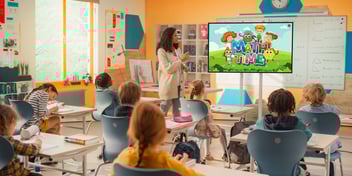
When the final bell rings and classrooms empty for summer, most people assume the technology powering those spaces simply gets turned off until students return. In reality, summer is often the busiest and most important season for education technology teams—and for partners like FORTÉ—helping schools prepare for the new school year that begins in just a few short months.
While students and teachers recharge, IT departments, facilities teams, and technology partners shift into action. The summer months provide a limited but critical opportunity to maintain, upgrade, repair, and rethink the systems schools rely on every day. For many school districts, this short window determines whether classrooms will feel effortless and reliable on the first day back, or whether they’ll spend another year troubleshooting the same recurring issues.
Throughout the school year, technology is under constant pressure. Classroom displays, microphones, cameras, wireless presentation systems, collaboration tools, and paging systems are used daily across thousands of learning spaces. Small issues that seem manageable during the school year can pile up when school is in session. A display may intermittently disconnect. Audio quality may decline. A room may have inconsistent controls compared to the classroom next door. During active instruction, there’s rarely enough time to fully address these problems.
Summer break allows valuable time to fix and upgrade solutions.
With classrooms temporarily empty, schools can finally focus on deeper maintenance and larger-scale improvements without disrupting learning. Devices are updated, systems are tested, equipment is repaired, and aging technology is replaced. IT teams often spend these months re-imaging devices, updating software and firmware, reviewing security standards, and preparing networks for the upcoming year.
This is also when FORTÉ works closely with schools and districts to evaluate how classroom technology is performing—not just from a technical standpoint, but from a user experience perspective. The goal isn’t simply to add more technology. It’s to create spaces that are intuitive, reliable, and easier for educators to use every day.
One of the biggest challenges many schools face is inconsistency between classrooms. Different buildings, vendors, room types, and deployment timelines often result in spaces that all operate differently. Teachers may walk into one classroom with intuitive controls and reliable audio, then move into another space that requires completely different workflows. Over time, this creates frustration, training challenges, and unnecessary complexity for both educators and support teams. That’s why summer has become the ideal time for schools to focus on standardization.
By creating more consistent classroom experiences across campuses, districts can simplify support, reduce troubleshooting time, and help teachers feel more confident using technology from day one. Standardized spaces also make it easier for IT teams to monitor and manage systems proactively throughout the year. Through strategic planning, design, and deployment, FORTÉ helps schools build environments that support long-term scalability and simplify day-to-day operations.
Summer is also when many schools invest in future-ready learning environments. Hybrid learning capabilities, upgraded audio systems, collaborative displays, and flexible communication tools are increasingly becoming part of long-term education strategies. Rather than simply replacing outdated equipment, districts are looking for ways to create learning spaces that improve engagement, accessibility, and communication for years to come.
The reality is that the first day of school doesn’t begin in August—it begins during the summer.
The work happening behind the scenes during these months plays a major role in shaping the classroom experience students and teachers will have throughout the entire year. When technology is thoughtfully maintained, strategically upgraded, and designed with simplicity in mind, schools are better positioned to start strong, reduce disruptions, and create environments where learning can happen without technology getting in the way.
Because when school is out, the real preparation begins.
Ready to improve the classroom experience for students, educators, and IT teams this fall? Let’s talk!