Being an early adopter doesn’t automatically mean you know how your meeting room technology stacks up. To help you find out, FORTÉ conducted a survey of more than 500 C-level and IT leaders across the U.S. Our goal was to get a candid look at which collaboration technologies organizations are using now and what’s on the horizon.
The big headline is that just 2% of survey respondents said they aren't using any of the modern or AI-enabled meeting room features we asked them about. That means organizations have moved well past the question of whether to adopt and are now focused on which features to prioritize—or optimizing existing ones.
The Most Widely Adopted Smart Meeting Features
Two features rose to the top of the list for organizations of every size:
-
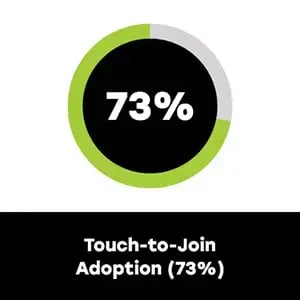
Simple touch-to-join meeting technology leads with 72.9% adoption. One tap starts the meeting. For organizations using Teams, Zoom, or Google Meet, this capability is built in and simply needs to be configured consistently across rooms.
-
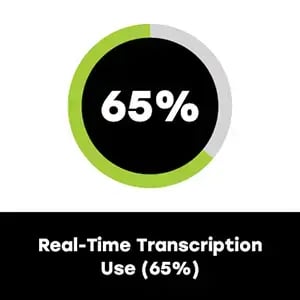
Real-time transcription follows closely at 65% adoption. It delivers automatic meeting notes, searchable records, and improved accessibility. Like touch-to-join, it’s already included in UC platforms—the challenge is enabling it consistently for all users and spaces.
Smart Meeting Features Many Organizations Have Added
Beyond the top two features, a meaningful portion of organizations have layered in additional capabilities:
-
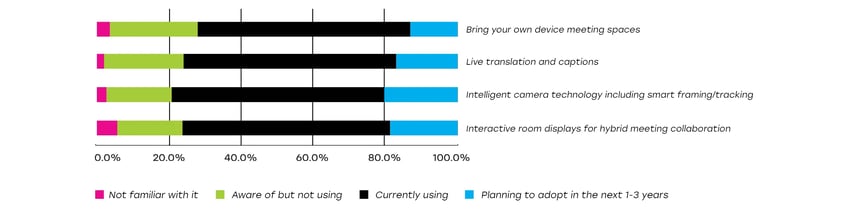
Intelligent camera technology with smart framing and tracking keeps remote participants visually connected as people move around the room. Hardware from brands like Jabra, Logitech, or Poly works alongside your UC platform.
-
Interactive room displays help level the playing field for hybrid meetings. Touch-enabled displays such as Microsoft Surface Hub or Crestron panels provide a shared, visual collaboration experience for all participants.
-
Live translation and captions are already included in Teams, Zoom, and Google Meet, reducing language barriers without adding new tools.
-
Bring-your-own-device spaces let employees walk in and connect on their own terms, lowering friction and reducing IT support requests.
The common thread across all four is that the technology is usually already in place. The real work is ensuring consistent configuration and performance across every room and every user.
Where Meeting Room Technology Investment Is Headed Next
Automated room health checks with failure prediction have relatively low adoption today but show the highest planned investment momentum. These range from simple monitoring dashboards built into UC platforms to advanced systems that predict failures before they occur.
People recognition with on-screen attendee labeling is gaining traction, especially in larger organizations. Instead of seeing “Conference Room A,” remote participants see names matched to faces in real time—creating a more personal and connected meeting experience.
Get the Full Picture
This overview is just a snapshot of our findings. For complete adoption data, investment priorities, and implications for IT leaders, download the full report.